SECONDARY
SECONDARY
ScnBasic
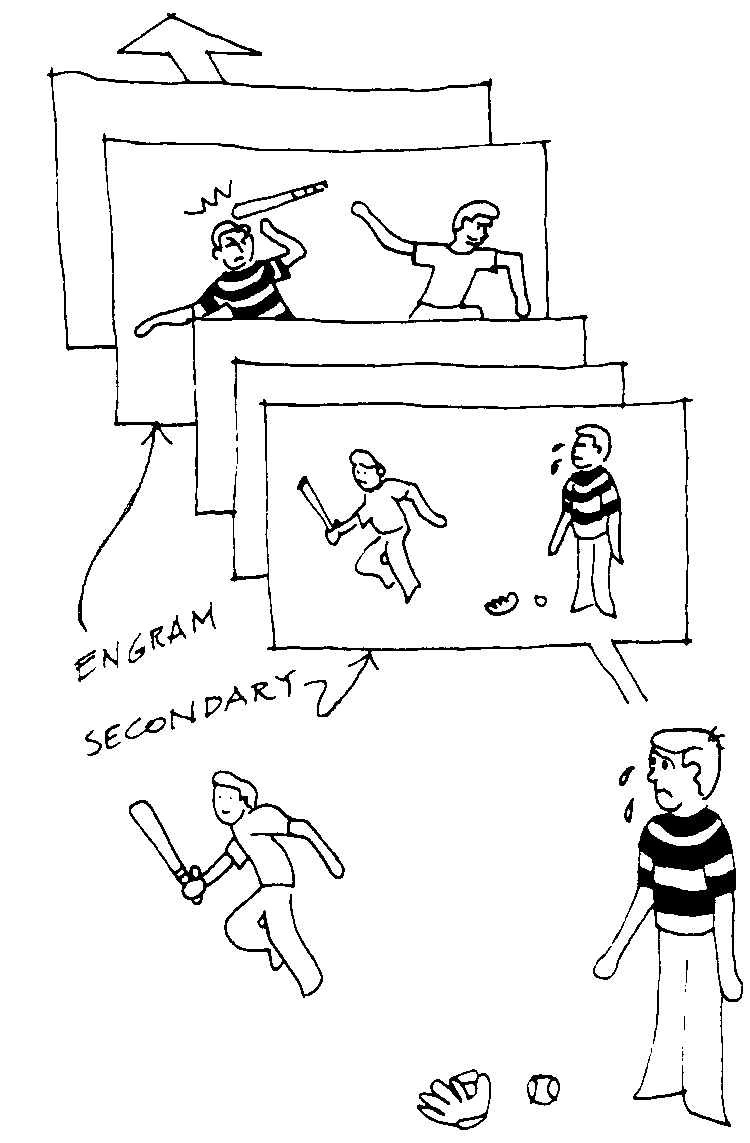
A mental image picture of a moment of severe and shocking loss or threat of loss which contains misemotion such as anger, fear, grief, apathy or "deathfulness." It is a mental image recording of a time of severe mental stress. It may contain unconsciousness. When it is restimulated by a similar but lighter experience another mental image picture is recorded which becomes a lock on the secondary and serves to keep the secondary alive. A secondary is called a secondary because it itself depends upon an earlier engram with similar data but real pain, etc. See also engram; lock.
SECONDARY
ScnMaster
also called secondary engram. A period of anguish brought about by a major loss or threat of loss to the individual. The secondary engram depends for its strength and force upon physicalpain engrams which underlie it. See also engram in this glossary. —The Anatomy of the Human Mind Glossary, —Academy Level II Glossary, —Clearing Congress No. 1NThe Fact of Clearing Approved Glossary, —PDC Volume 1 Approved Glossary, —PDC 2 Approved Glossary, —PDC Volume 3 Approved Glossary, —PTS-SP Approved Glossary
SECONDARY
ScnTech